


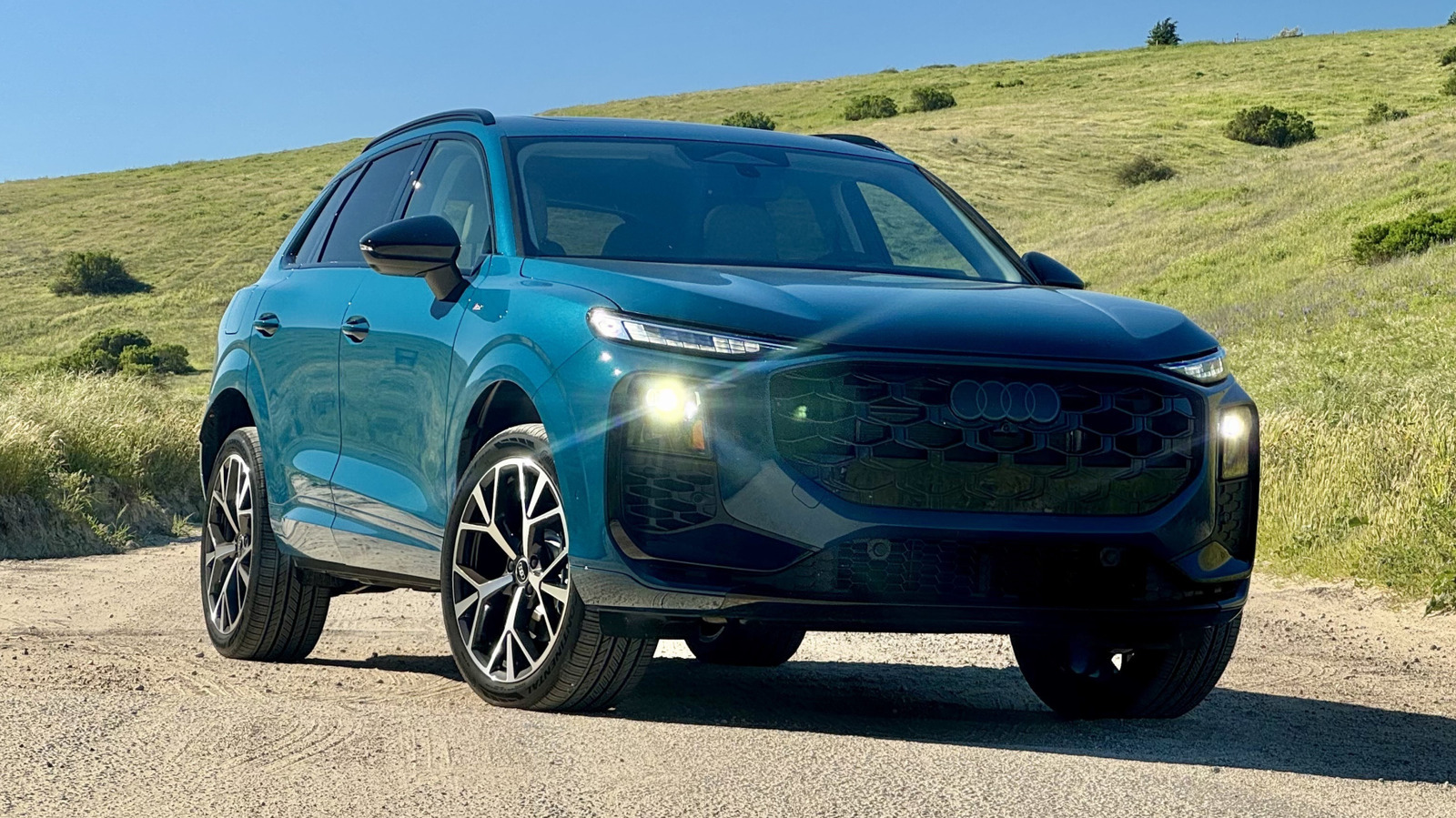
The new 7-speed dual-clutch is the 2026 Q3’s biggest point of growth compared to last year’s model. The old car’s 8-speed torque-converter felt like it was out of shape and needed to take a breath between each shift regardless of throttle input. The new dual-clutch unit does a much better job of changing gears, especially when using the steering wheel-mounted paddle shifters. It still feels characteristically like a dual-clutch though, in that when you take your foot off the brake, you feel a surge of power that gets the car moving forward at a surprisingly fast pace without touching the throttle pedal. You get used to it pretty quickly, but it’s alarming the first few times it happens.
Its more powerful turbocharged engine does move the new Q3 along without complaint, but this is not a sporty car. The lazy throttle pedal requires a lot of input to get the thing moving, and I found its calibration to either cause me to crawl away from a stop, or dig deeper into the throttle and unintentionally speed away from a stop. This is something that is likely to normalize eventually for real-world owners, but in my short time driving the Q3 I didn’t find a sweet spot with the throttle. Use the paddle shifters to keep the engine in its power band, and it scoots nicely out of corners.
 Logan K. Carter/ Jalopnik
On the gorgeous green twisting roads around California’s pristine central coast, the Q3
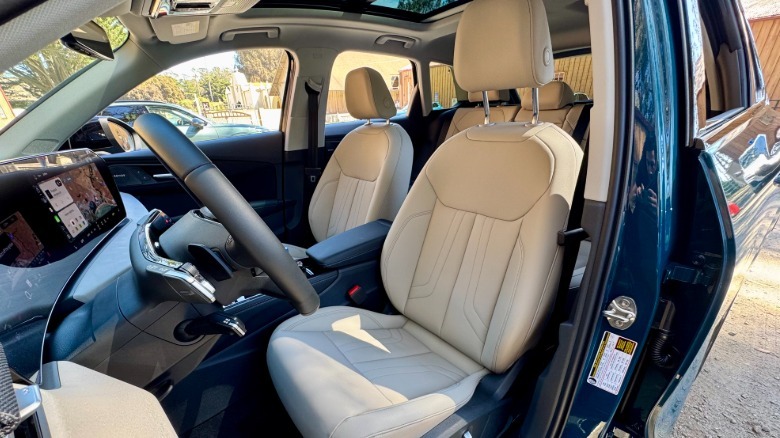
felt totally capable of hustling through twisty roads, but it never felt playful or especially exciting. The brakes are great, and the suspension is not adaptive but manages to keep the tall Q3 remarkably flat through turns. The seats offer little lateral support, though, so you’ll be bracing yourself with your knees the whole time. I didn’t notice any tendency for the nose to push wide when entering a corner, but I also didn’t get much time to push the car.
Take it on less exciting roads and the Q3 feels powerful, solid, and overall very easy to drive and get along with. There’s ample power for merging or passing, and engine noise is virtually unnoticeable, regardless of engine speed. Though despite its standard dual-pane front windows, my test car’s 20-inch wheels produced a fair amount of road noise that made its way into the cabin. Can’t win ’em all, I guess.
 Logan K. Carter/ Jalopnik
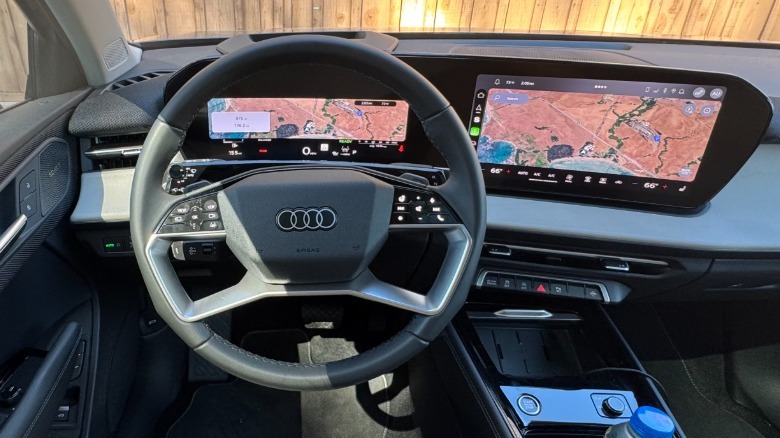
My fully loaded test car was equipped with the $1,250 driver-assistance package, which adds lane centering and lane-change assist to the standard adaptive cruise control, a heated steering wheel, park assist plus, and a surround-view camera. The lane centering and adaptive cruise control worked great during my very brief time using them, and I appreciated the haptic steering wheel that doesn’t require a jiggle to remind it you’re still alive; you can just touch it.

